


Traveling abroad can be exciting, but packing medications requires careful planning. Many travelers don’t realize that painkillers legal in their home country might be restricted or even illegal elsewhere. Understanding international medication laws helps you avoid serious legal troubles and ensures you have access to necessary treatments during your trip.
Understanding International Medication Regulations
Different countries have vastly different approaches to medication control. What seems like a routine over-the-counter painkiller in one nation could be a controlled substance in another. Therefore, researching your destination’s specific rules is essential before departure.
The World Health Organization maintains lists of controlled substances, but each country implements its own version of these guidelines. Additionally, some nations have stricter interpretations than others. For instance, codeine-based painkillers are available over the counter in some European countries but require prescriptions or are banned entirely in others.
Common Painkillers and Their International Status
Over-the-counter medications like ibuprofen and acetaminophen generally face fewer restrictions worldwide. However, stronger prescription painkillers often encounter significant limitations. Opioid-based medications, including those containing codeine, oxycodone, or tramadol, typically require special documentation and may be prohibited in certain countries.
Many Asian and Middle Eastern countries maintain particularly strict policies regarding opioid medications. Japan, for example, prohibits many common prescription painkillers that Americans use regularly. Similarly, the United Arab Emirates has extensive restrictions on medications containing codeine or other opioid derivatives.
Moreover, some countries limit the quantities of medication travelers can bring, even with proper documentation. Understanding these limitations prevents unnecessary complications at customs checkpoints.
Essential Documentation for Traveling with Painkillers
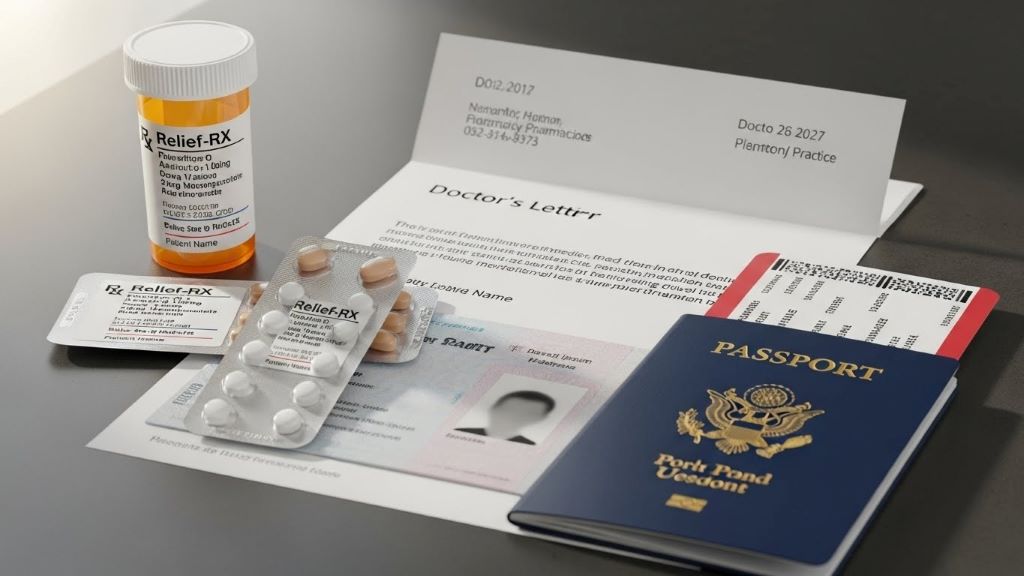
Proper documentation is your best defense against legal issues when traveling with painkillers. First, obtain a letter from your prescribing physician. This letter should include your name, the medication’s generic and brand names, the prescribed dosage, and the medical condition requiring treatment.
Furthermore, keep medications in their original packaging whenever possible. Original containers display the prescription label, which serves as additional proof of legitimacy. If space is limited, at least bring a copy of the prescription label or the prescription itself.
The U.S. State Department provides country-specific information about medication restrictions through their international travel website. Checking these resources before departure can save considerable trouble later.
Declaring Medications at Customs
Always declare your medications at customs, even if you believe they’re perfectly legal. Honesty is crucial when dealing with customs officials. Attempting to hide medications, even unintentionally, can result in serious consequences.
Consequently, arrive at airports with extra time for potential medication inspections. Customs officers may need to verify your prescriptions or consult with supervisory staff. Patience and cooperation during this process demonstrate good faith and typically lead to smoother experiences.
Additionally, keeping documentation easily accessible speeds up the declaration process. Place prescription letters and medication lists in an easily reachable pocket or bag section. This organization shows preparedness and respect for customs procedures.
Countries with Particularly Strict Medication Laws
Several countries deserve special attention due to their stringent medication policies. Japan prohibits many common medications, including certain ADHD medications, cold medicines containing pseudoephedrine, and various prescription painkillers. The Japanese Embassy or Consulate can provide pre-approval for necessary medications through their import certification process.
Singapore enforces severe penalties for drug violations, including medications. The country’s laws require travelers to declare all medications and obtain advance approval for controlled substances. Failure to comply can result in hefty fines or imprisonment.
Indonesia similarly maintains strict drug laws. Travelers have faced prosecution for carrying medications without proper documentation. Therefore, contacting the Indonesian Embassy before travel is strongly recommended if you need to bring prescription painkillers.
The United Arab Emirates and other Gulf states prohibit numerous medications common in Western countries. Even trace amounts of prohibited substances can lead to arrest. According to the U.S. State Department’s travel advisories, researching specific country requirements is essential for safe travel to these regions.
Alternative Solutions for Pain Management While Traveling
Sometimes the safest approach involves finding alternatives to bringing restricted painkillers abroad. Consulting with your doctor about switching to medications acceptable in your destination country provides one solution. Many conditions have multiple treatment options with varying international regulations.
Furthermore, some travelers choose to obtain medications at their destination. However, this requires research into local pharmacies, prescription requirements, and medication availability. Language barriers can complicate this process, so preparation is key.
Travel insurance that covers medical consultations abroad offers another safety net. If pain issues arise during your trip, you can visit local doctors who understand their country’s medication regulations. This approach ensures you receive appropriate, legal treatment.
Tips for Safe Medication Travel
Pack medications in carry-on luggage rather than checked bags. This prevents loss and provides immediate access if customs officials have questions. Additionally, checked luggage sometimes gets lost or delayed, which could leave you without necessary medications.
Bring only the amount needed for your trip, plus a few extra days’ supply for emergencies. Excessive quantities raise suspicion and may violate quantity restrictions. Calculate your needs carefully before packing.
Moreover, research pharmacy locations at your destination. Knowing where to find additional medication if needed provides peace of mind. International pharmacy chains often exist in major cities worldwide.
Consider splitting medications between multiple bags if traveling with companions. This strategy ensures someone in your group has access to medications if one bag is lost. However, ensure each person carrying medications has copies of relevant prescriptions.
Legal Consequences of Violating Medication Laws
The penalties for violating international medication laws can be severe. Some countries treat prescription medication violations as drug trafficking offenses. These charges can result in lengthy prison sentences, substantial fines, or both.
Therefore, ignorance of local laws rarely provides an adequate defense. Courts expect travelers to research and comply with destination country regulations. The burden of understanding these laws falls on the traveler, not customs officials.
Your home country’s embassy can provide limited assistance if you face legal trouble abroad. However, they cannot overturn local court decisions or get you released from custody. Prevention through proper preparation is infinitely better than dealing with legal consequences.
Resources for Medication Travel Information
Several reliable resources help travelers navigate international medication laws. The Transportation Security Administration provides guidelines for flying with medications within the United States. For international travel, consult the embassy or consulate of your destination country.
The International Narcotics Control Board offers information about controlled substances globally. Additionally, professional organizations like the International Association for Medical Assistance to Travelers provide country-specific health information.
Your healthcare provider can also offer valuable guidance. Many doctors have experience with international travel medication issues and can suggest appropriate alternatives or provide detailed documentation.
Conclusion
Traveling internationally with painkillers requires thorough preparation and understanding of varying medication laws. Different countries maintain significantly different regulations regarding prescription and over-the-counter painkillers. Proper documentation, honest customs declarations, and advance research prevent legal troubles and ensure access to necessary medications. When in doubt, contact the embassy or consulate of your destination country for specific guidance. Taking these precautions allows you to focus on enjoying your travels rather than worrying about medication legality.
Frequently Asked Questions
Can I bring ibuprofen on an international flight?
Yes, over-the-counter medications like ibuprofen are generally allowed on international flights. However, keep them in their original packaging and declare them if required by customs officials at your destination.
Do I need a prescription to travel with painkillers internationally?
For prescription painkillers, you should always carry a doctor’s letter and the original prescription. Over-the-counter painkillers typically don’t require prescriptions, but documentation is still recommended for stronger formulations.
Which countries have the strictest painkiller laws?
Japan, Singapore, Indonesia, and United Arab Emirates maintain particularly strict medication laws. These countries prohibit many common prescription painkillers and enforce severe penalties for violations.
How much medication can I bring when traveling internationally?
Most countries allow a reasonable personal supply, typically covering the duration of your trip plus a few extra days. Excessive quantities may be questioned or confiscated, so bring only what you need.
What happens if my painkiller is illegal in the country I’m visiting?
If your medication is prohibited at your destination, consult your doctor about alternatives before traveling. Never attempt to bring illegal medications across borders, as penalties can include imprisonment and substantial fines.
Related Topics:
Why You Should Visit Istanbul as a First-Time Traveler
What Month is Best to See Cherry Blossoms in Japan? A Complete Guide
 Administrator